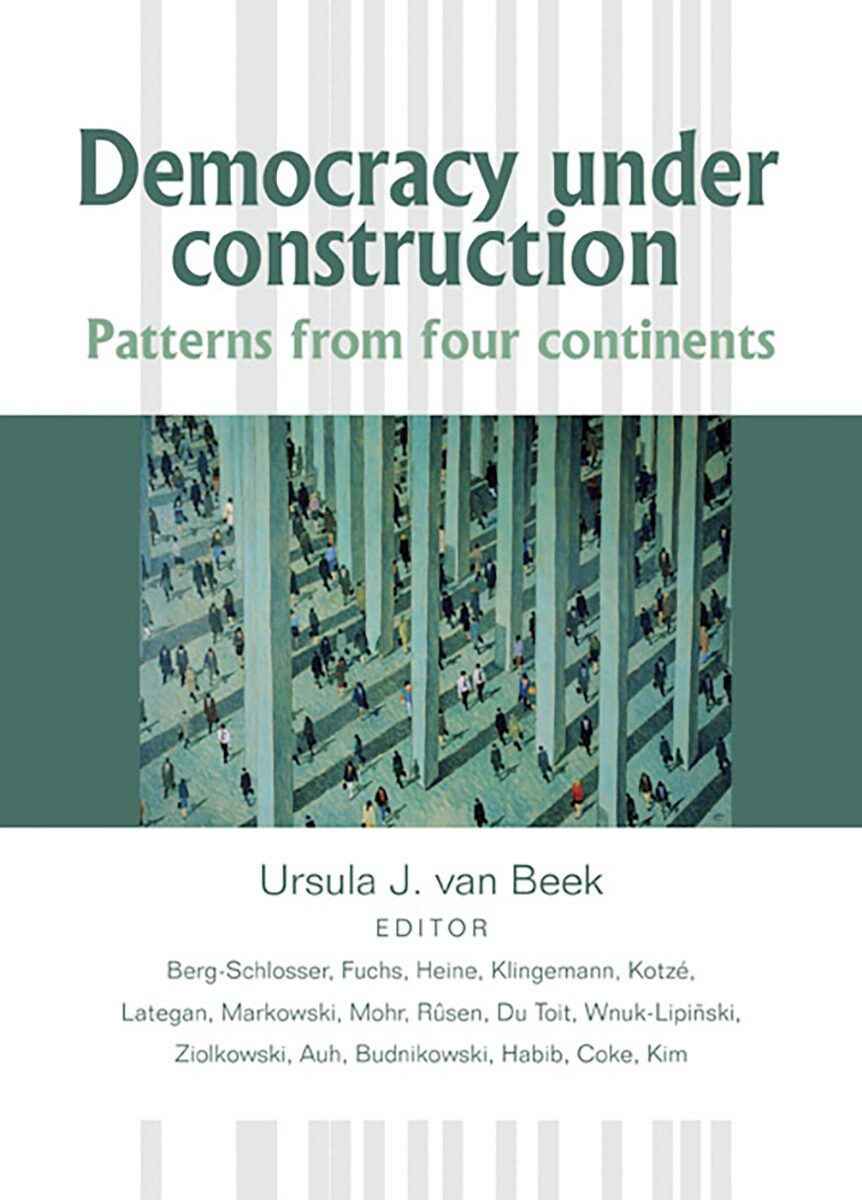
This book is a major contribution to our understanding of how demographic consolidation works. It skilfully integrates a broad comparative analyses of the roles played by such factors as economic performance, institutional engineering, civil society and mass support with detailed attention to the situation-specific factors influencing democratic consolidation in five different settings: Poland, East Germany, South Africa, Chile and South Korea.
Chapter 1: Theoretical framework and methodology
PART ONE: POLITICAL SOCIETY
Chapter 2: Institutional engineering in new democracies
Chapter 3: Post-autocratic party systems and the regime cleavage in new democracies
Chapter 4: Support for democracy and its consolidation in fragile polities
PART TWO: ECONOMIC SOCIETY
Chapter 5: Economic policy and performance and the consolidation of democracy
PART THREE: CIVIL SOCIETY
Chapter 6: Civil society and democracy
Chapter 7: Historical contexts
Chapter 8: Data analyses, comparisons and synthesis
PART FOUR: HISTORICAL MEMORY
Chapter 9: Historical memory and democracy: Setting the scene
Chapter 10: Historical memory and identity
Chapter 11: Remembering, forgetting and the politics of memory
Chapter 12: Conclusions: Successful democratisation across cultures?
All of our printed books are sold through Takealot, a leading book retailer and distributor in South Africa. By clicking "Continue", you'll be redirected to their website, where you can complete your purchase.
All of our printed books are sold through Snapplify, a leading ebook retailer and distributor in South Africa. By clicking Continue, you'll be redirected to their website, where you can complete your purchase.