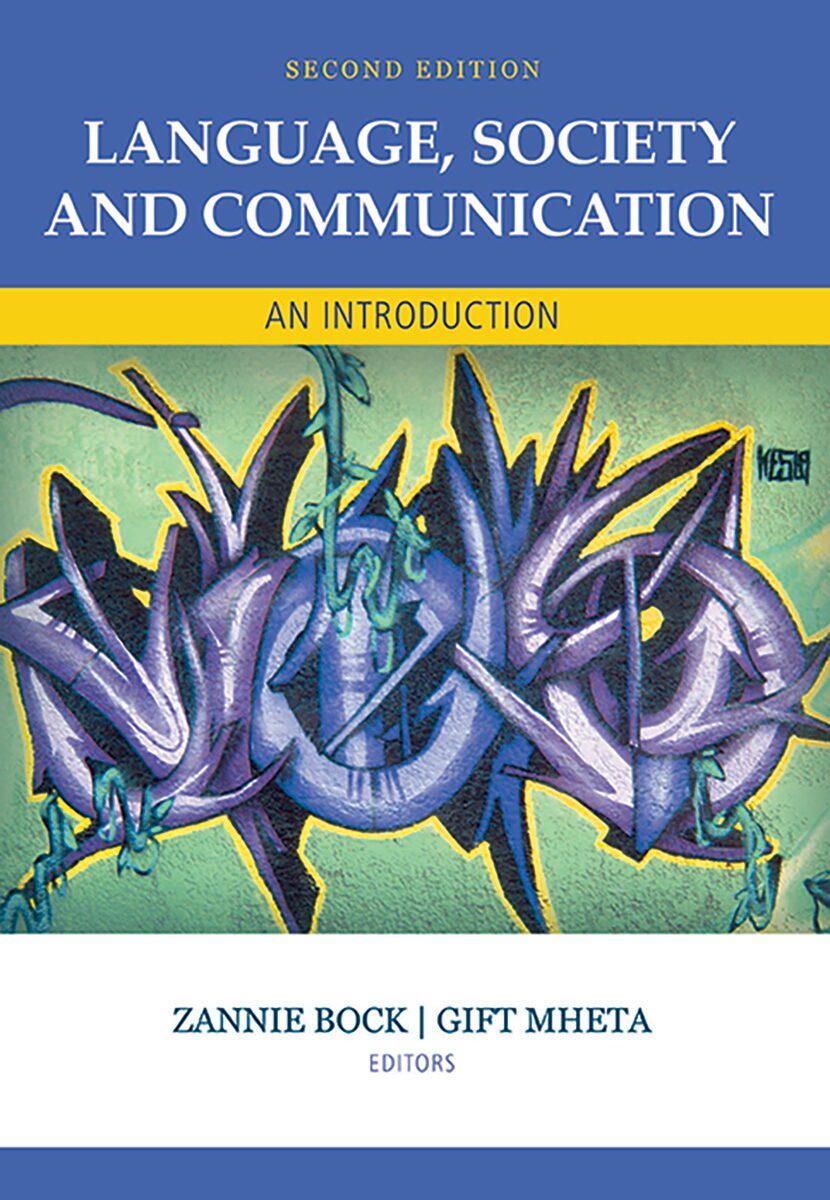
We live in a multilingual, transforming society in which language plays a dynamic and central role. We use it every day for communication and it is not possible to imagine life without it – it is generally recognised as a mark of what makes us human. But how often do we think about exactly what language is and how we actually use it? Language, society and communication introduces established and new linguistic concepts and theories, and links these to contemporary issues in society and the media, including new social media, with a particular focus on southern Africa.
Language, society and communication explores how language is intricately bound up with issues of power, status and identity. It explores the tension between the diverse nature of everyday language practices, on the one hand, and the societal pressures towards managing and containing this diversity, on the other. It also demonstrates the relevance of linguistic study (e.g. phonology and syntax) to real-world problems (e.g. analysis of a child’s acquisition of language), within a southern African context. Study questions and case studies, which relate the theoretical ideas discussed to current research, are provided at the end of each chapter.
Language, society and communication is aimed at students studying linguistics, language and communication, and related fields such as language education.
PART 1 LANGUAGE AS COMMUNICATION
Introduction to Part 1 Language as communication
Chapter 1 Communication in context
Chapter 2 Approaches to communication
Chapter 3 Introduction to semiotics
PART 2 FORMAL ASPECTS OF LANGUAGE
Introduction to Part 2 The structure of language
Chapter 4 Phonetics: the study of human speech sounds
Chapter 5 Phonology: sound patterns in languages
Chapter 6 Morphology: how words are formed
Chapter 7 Syntax: from words to sentences
PART 3 LANGUAGE LEARNING
Introduction to Part 3 Language development
Chapter 8 First language acquisition
Chapter 10 Language attrition
PART 4 FROM LANGUAGES TO LANGUAGING
Introduction to Part 4 From languages to languaging
Chapter 11 Language, society, diversity
Chapter 12 Language families and typologies
Chapter 13 Language standardisation
Chapter 14 Language contact and languaging
Chapter 15 Linguistic diversity and its discontents
PART 5 LANGUAGE, IDENTITY AND PLACE
Introduction to Part 5 Language, identity and place
Chapter 16 Language and identity
Chapter 17 Branding
Chapter 18 Linguistic landscapes
PART 6 FINALE
Chapter 19 Language study and the professions
All of our printed books are sold through Takealot, a leading book retailer and distributor in South Africa. By clicking "Continue", you'll be redirected to their website, where you can complete your purchase.
All of our printed books are sold through Snapplify, a leading ebook retailer and distributor in South Africa. By clicking Continue, you'll be redirected to their website, where you can complete your purchase.