
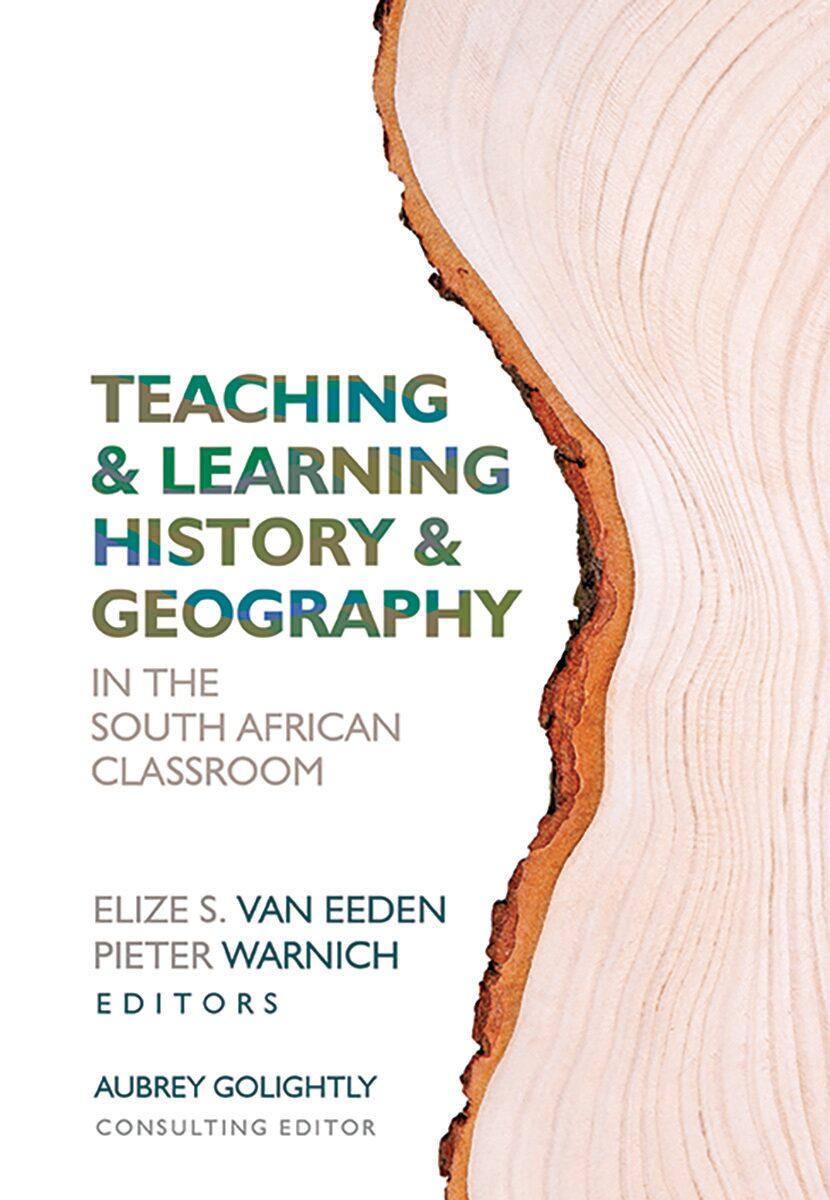
History and Geography are dynamic and diverse disciplines, but disciplines that have always displayed integrative abilities and potential because human actions in spaces and places matter in both. In History, the human past concerns time and space. In Geography, space and spatiality dominate and can include humanity. Teaching and learning History and Geography in the South African classroom is the first textbook to consider History and Geography as interconnected disciplines in the South African education context.
This book guides readers through developments in the History and Geography fields, new focus areas and some refreshed teaching and learning possibilities unlocked by technology. Drawing on prodigious research, experts in these fields impart recommendations for teaching, understanding, learning and assessing these subjects purposefully.
Contents include the following:
Teaching and learning History and Geography in the South African classroom is aimed at educators and prospective educators in the Social Sciences, History and Geography programmes.
Elize S. van Eeden is a professor at North-West University, and chairs the subject group History at the Vaal Triangle Campus. She served as chairperson of the South African Society for History Teaching (2009–2017) and is editor or assistant editor of three peer-reviewed journals accredited by the Depart-ment of Higher Education. She has authored more than 80 peer-reviewed articles, and has contributed chapters in 18 books as either co-writer or editor. Elize has authored 12 History books, one being the textbook, Didactical guidelines for teaching history in a changing South Africa (1999). Her main re-search interest is regional history in multidisciplinary research environments and its application in regional history in teaching.
Pieter Warnich is a senior lecturer in History and Social Sciences Education at North-West University. He is chairperson of the subject group History and Social Sciences Education at the Potchefstroom Campus. His main areas of specialisation are teaching, learning and assessment and History education curriculum studies development. Pieter has published widely in these fields where he authored peer-reviewed articles and chapters in books. He is co-editor of the book Outcomes-based assessment for South African teachers (2012). Currently he is editor of the accredited open-access History teaching journal, Yesterday&Today.
Chapter 1 Unpacking the Curriculum and Assessment Policy Statement (CAPS) Social Sciences
Part A: History
Section 1: Remembering (one’s own) History
Chapter 2 Reflections on writing and teaching History in South Africa
Chapter 3 Textbooks, History and teaching
Chapter 4 Practicalising local and regional histories in History curricula
Chapter 5 Feeling like a historian
Section 2: Facing controversial history
Chapter 6 Teaching controversial issues in History
Chapter 7 Miracle Rising® as source for teaching and learning controversial issues in History
Chapter 8 Facing emotions and controversies of the past and present in South African Social Sciences and History classrooms
Section 3: Teaching, doing and assessing History
Chapter 9 Thinking historically: Beyond names and dates towards historical understanding
Chapter 10 Cognitive development strategies within the History classroom
Chapter 11 Enhancing History teaching through the integration of technological devices and online teaching
Chapter 12 Assessment and the History teacher: Classroom-based performance assessment in action with role-play and debating as examples
Part B: Geography
Section 4: Space, place and maps
Chapter 13 Space and place for Geography teaching and learning in the 21st century
Chapter 14 Mapping and maps in Social Sciences’ Geography Education
Section 5: Facing Geography
Chapter 15 Issues-based teaching and learning in Geography
Chapter 16 The Social Sciences and Education for Sustainable Development (ESD): An interdisciplinary reflection
Chapter 17 Indigenous knowledge systems and Africanisation in relation to Geography teaching and learning
Section 6: Teaching, doing and assessing Geography
Chapter 18 Field work excursions in the Social Sciences
Chapter 19 GIS, Google Earth, Google Maps and GPS as resources and their application in Geography Education
Chapter 20 Teaching and learning styles and strategies in Geography Education
Chapter 21 Assessment in school Geography
All of our printed books are sold through Takealot, a leading book retailer and distributor in South Africa. By clicking "Continue", you'll be redirected to their website, where you can complete your purchase.
All of our printed books are sold through Snapplify, a leading ebook retailer and distributor in South Africa. By clicking Continue, you'll be redirected to their website, where you can complete your purchase.