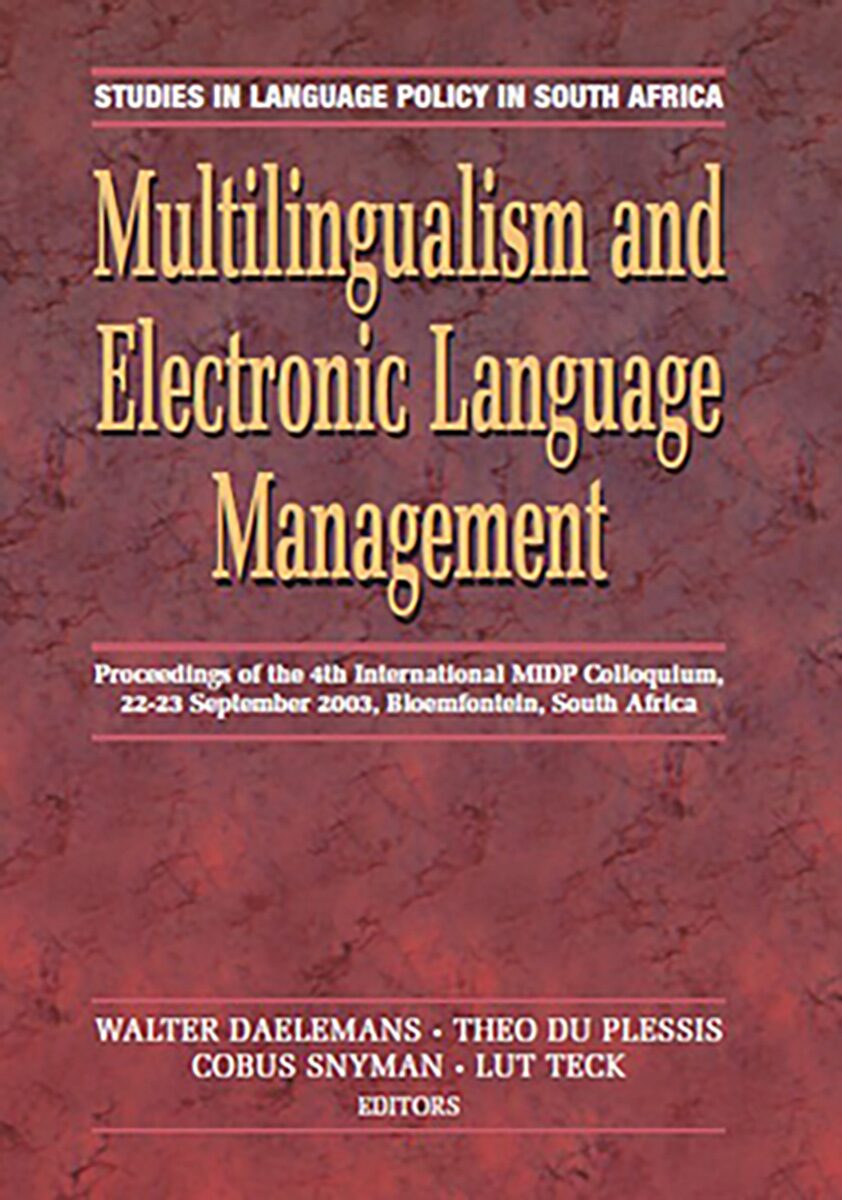
Multilingualism and Electronic Language Management is different from the other books in the series, "Studies in Language Policy in South Africa". This, the fourth book in the series, focuses on Human Language Technology solutions for the challenges presented by the Multilingual Information Society.
The themes discussed are very topical and reflect a state-of-the-art review of current work in progress. The different sections of the book deal with machine translation, computer-aided translation, electronic language management, localisation and text mining and language interfaces, all standard themes in the field of Human Language Technology.
One is struck by the strong relationship between research, development and commercialisation in this field, as evidenced by the papers. Also, the importance of an enabling funding and policy environment, one of the key success factors of Human Language Technology development in Europe, is evident.
Multilingualism and Electronic Language Management also aims to provide an overview of developments in the field in South Africa, especially insofar as policy-making is concerned, but also in terms of research and development. The papers were selected from contributions to a successful international colloquium held in September 2003 in Bloemfontein, South Africa on the theme, "Multilingualism and Electronic Information Management".
The participants of this fourth colloquium in the MIDP colloquium series were from the United States, several European countries and South Africa. The colloquium was sponsored by the Province of Antwerp, the Dutch Language Union and the National Research Foundation of South Africa.
Multilingualism and Electronic Language Management will be the first publication of its kind in South Africa and is one of the few on the world market that present this kind of comparative overview. Researchers and developers in the field of Human Language Technology, students, as well as language practitioners who utilise Human Language Technology solutions will find the book useful.