
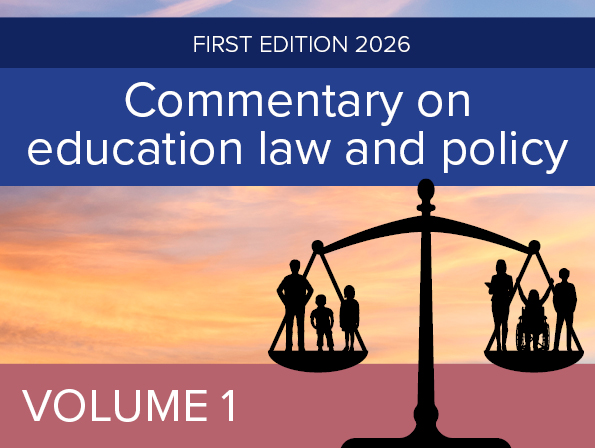
COMMENTARY ON EDUCATION LAW AND POLICY
FIRST EDITION 2026
Volume 1
Education, human rights and litigation in education

Chapter 1: The right to education in international law

Chapter 2: The right to education in South Africa

Chapter 3: Access to education
Chapter 4: The right to language and culture
Chapter 5: Alternatives to litigation
Course Content
Chapter 1: The right to education in international law
You don't currently have access to this content
Virtual (Optional)
Chapter 2: The right to education in South Africa
You don't currently have access to this content
7 Topics
1. Introduction: The Constitution as a transformative project
You don't currently have access to this content
2. Legal and international framework
You don't currently have access to this content
3. Development of education law and policy: Historical evolution
You don't currently have access to this content
4. Judicial interpretation as transformative force
You don't currently have access to this content
5. Current debates and critical reflections: Ongoing struggle for transformation
You don't currently have access to this content
6. Conclusion: unfinished transformation project
You don't currently have access to this content
Bibliography
You don't currently have access to this content
Chapter 3: Access to education
You don't currently have access to this content
9 Topics
1. Introduction
You don't currently have access to this content
2. Legal and constitutional framework
You don't currently have access to this content
3. Non-discrimination as a dimension of access
You don't currently have access to this content
4. Physical accessibility
You don't currently have access to this content
5. Financial accessibility
You don't currently have access to this content
6. Admission to public schools: Legal principles and practice
You don't currently have access to this content
7. Language and cultural inclusion within the broader access framework
You don't currently have access to this content
8. Conclusion
You don't currently have access to this content
Bibliography
You don't currently have access to this content
Chapter 4: The right to language and culture
You don't currently have access to this content
Chapter 5: Alternatives to litigation
You don't currently have access to this content