
Managing information – The basics done right
 Managing information – The basics done right
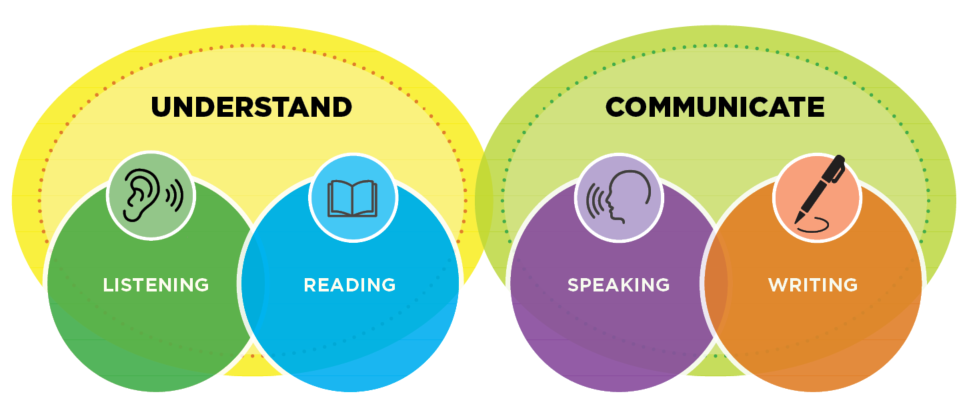
The one basic skill you will need regardless of what you study is the ability to handle information: to understand what comes your way and, in turn, communicate your thoughts and ideas clearly. You have to understand by listening and reading; you have to communicate by speaking and writing.
Listening
- Listening is an activity. If you sit back passively, letting the other person’s words wash over you, you will understand nothing. Concentrate. Give the speaker your full attention.
- In a conversation, listen with all you’ve got, not only your ears. Body language gives you a whole second layer of information, which may never be expressed in words. Your body language in turn will show your interest, keeping the energy flowing to and fro. Asking thoughtful questions will help you understand what is being said even better.
- You haven’t really heard someone until you can capture the central meaning of his or her message in your own words. Every so often, paraphrase what the other person has said.
- In a lecture, don’t try and copy every word that is said. Listen, understand the point the lecturer is making, jot it down and move on. Stay with him or her.
Reading
- Passing your eyes over the words on a page is not the same thing as reading. Reading must be systematic; you must be able to break a passage down into its component parts. What is the core idea? What supporting arguments does the author use? What new thoughts or terms are introduced? What do they mean?

Speaking
- The surest way to fail at getting your message across when you speak is to focus on yourself. Try and focus intensely on your message and your audience, and most of the anxiety about speaking in a group or in front of others will be overcome.
- Make an outline of the main thoughts you want to convey. In this way you will ensure your nerves do not make you lose the thread of your argument.
Writing
- The surest way to fail at getting your message across when you speak is to focus on yourself. Try and focus intensely on your message and your audience, and most of the anxiety about speaking in a group or in front of others will be overcome.
- Make an outline of the main thoughts you want to convey. In this way you will ensure your nerves do not make you lose the thread of your argument.

A place to reflect
Using the information above, reflect on these key skills. Which are your strengths, which are your weaknesses? What can you do to improve these skills?
A comprehensive skill: note-taking in class
There is no single correct way to take notes. Your notes are for you. No one else needs to understand them – but you must be able to when you look back at them! Here are a few tips:

- Arrive early. Often the introduction sets out the shape of the lecture, making it much easier to follow.
- Make sure you are an active listener – understand rather than trying to remember. The more you think about what you are noting down, the more you will understand and remember later.
- DON’T
- Take down sentences or passages word for word
- Copy a mass of factual information
- DO
- Use a loose-leafed folder so you can add extra pages later
- Summarise – be concise
- Write neatly, so that you can read it later
- Use headings and numbered points
- Use abbreviations/shorthandLeave spaces for later additions/amendments
- Note down the details of all books/other sources referred to
- Stay till the end. Often the lecturer will summarise the lecture in the last few minutes, which is very helpful for checking your notes.
Resources
- How to read a book by Mortimer J. Adler
- The elements of style by William Strunk and E.B. White
- How to speak How to listen by Mortimer J. Adler
- Studyskills:
- https://www.humanities.manchester.ac.uk/studyskills
- This website is a goldmine of helpful information.
Value of a textbook
- One of your key resources is your prescribed textbooks. Textbooks are carefully selected by your lecturer to provide you with a roadmap to guide you through your course in a logical and structured way. Many textbooks contain material that contextualises the South African environment, which is an added advantage.
- Remember, the long-term value of your textbook far exceeds the price you pay for it now. You invest in it now simply to obtain your degree, but the knowledge you gain from it will stand you in good stead for many years to come as you build a successful career for yourself.
- Start by reading the introduction and studying the table of contents to give you a framework for the material. Go back to the table of contents every time you start on a new section, so that you can fit it into the bigger picture.