
The brain is like a FIST
The brain is like a FIST
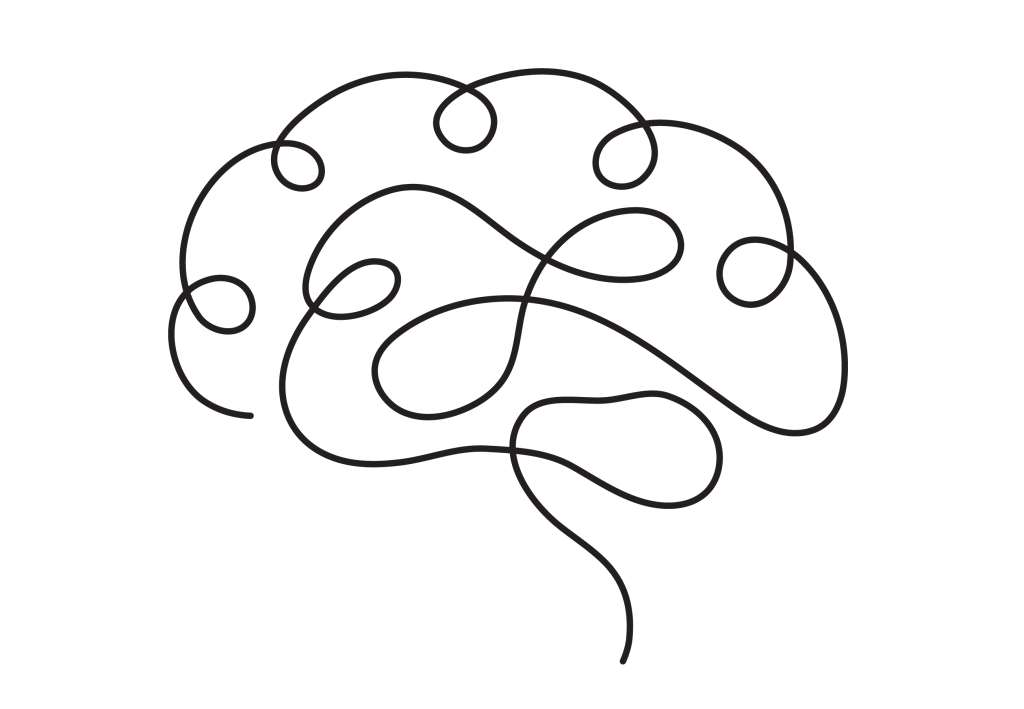
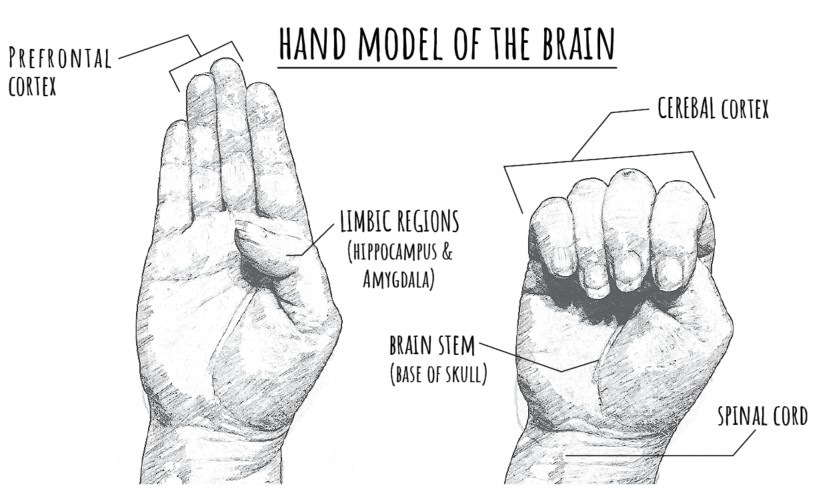
Both our (rational) thoughts and our (irrational, overwhelming) emotions live in our brains. If you make a fist with your thumb on the inside, you can get an idea of what the brain looks like.* The back of the hand represents the back of the head, with the face in front of the knuckles. Your wrist is the brainstem. The thumb represents the limbic area deep inside the centre of the brain. This is where your emotions live. The fingers represent the frontal cortex, right above your eyebrows. This is the home of rational thought and self-control, as well as things like idealism, concentration, abstract thought and creativity. There is a constant interplay between the two: you may hear good news, understanding it in the frontal cortex, and feel it in your tummy, because the limbic area, working with the brainstem, has sent a message straight to the nervous system.
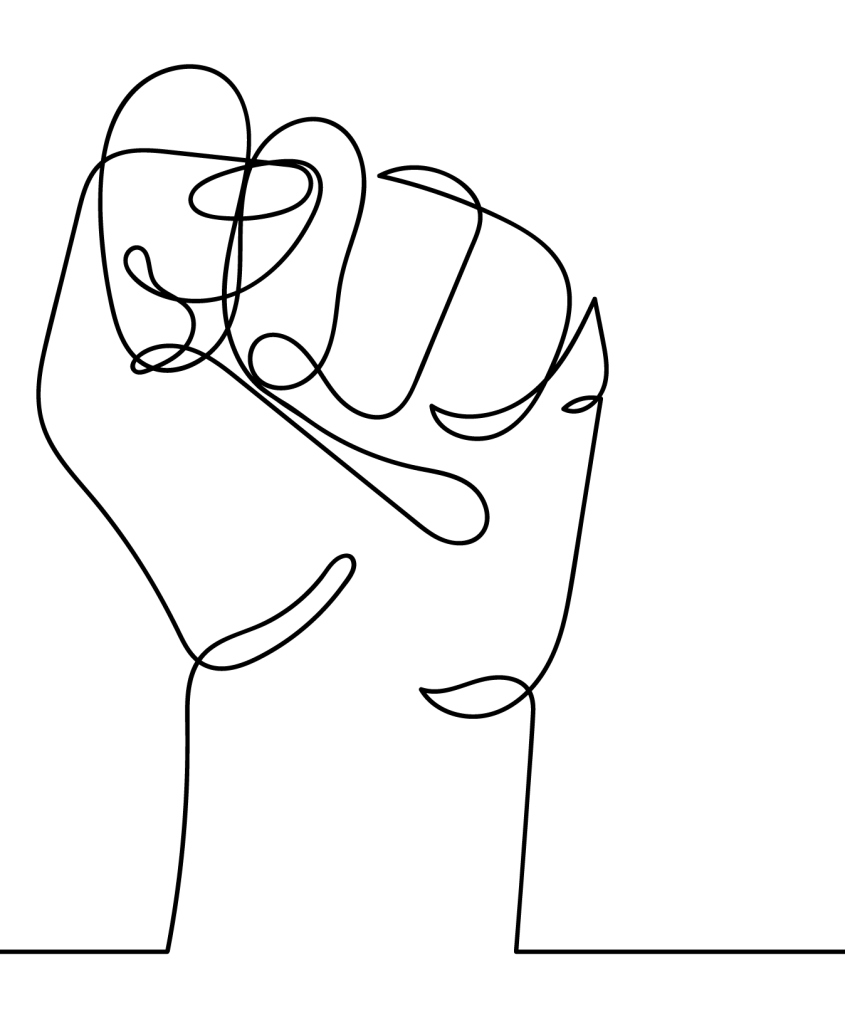
Problems arise when the limbic system takes over. It is programmed for survival, so its responses can be so intense that they overwhelm your rational self. If you are threatened, whether by someone with a knife or by the thought that you will never understand the work you need to do, the limbic system goes into “fight-flight-or-freeze” mode, and all rational thought goes out the window. You either want to hide, like the student quoted above, or to run away, or to throw that terrifying computer at someone! You need to get your rational self back in charge. That means involving the frontal cortex. Here are some tools to help you do that:
- Acknowledge your feelings. “Name it and tame it,” says Dr Dan Siegel. Put your feelings into words, for example: “I am afraid I will never be able to do this, and that I will ruin my family’s dreams.” Once you face your fear, you can begin to deal with it, because expressing it in words means involving the rational part of the brain. (You will find a handy tool to do that in the next section, The ABCDE of Resilience.)
- Now see if you can give those same feelings a different name, or label. “I’ll never be able to do this!” may change into, “All beginnings are hard. This is the beginning of my journey, and of course it is going to be hard.”
- Finding a different label for your feelings means re-interpreting them. We do this all the time without even realising it. For example, you see a picture of people crying in front of a church and you feel sad for them … but then you find out that they have come from a wedding and suddenly the tears mean happiness! Similarly, the computer is not an obstacle, but a powerful tool that you will learn to use. Soon.
- Talk to someone. Find a mentor or a counsellor and tell him or her what you are feeling. Most campuses have student support services where such people are available. Very often expressing your feelings in the company of someone who acts as a sounding board brings enormous relief.
- Look around you at how others are experiencing the same circumstances. Chances are, many of them are just as terrified as you are! As soon as you realise that your feelings are normal, the overwhelming anxiety will lessen.
- Try and see the situation through someone else’s eyes. Say, for example, you have a single person from a different cultural or religious background in your group. Can you put yourself in her shoes, and see how threatening the rest of you appear to her? Can you empathise with the feeling of being the outsider? Suddenly your own fears take on a completely different appearance! This is hard work, all done in and by the frontal cortex. But by making the effort, you will knock the limbic system back into its place very quickly.
- Consider the underlying assumptions that give rise to your feelings. You will find a handy tool to help you do that on the following page.
Resources:
- SADAG (SA Depression and Anxiety Group) https://sadag.org – great videos and support on the website; emergency line 0800 567 567
- Lifelinesa.co.za – 0861 322 322, or find their information on their website
Here’s a tool to help you think about your worries:
- What exactly is worrying me?
- Can I give it a different label, in other words, look at it in a different way?
- Is there someone I trust who I can talk to?
- Are other people facing the same challenge? How are they handling it?
- Do I believe something about the situation or myself that causes the worry? (For example: my teacher hates me; I will never understand this subject; my boyfriend/girlfriend is cheating)
- Do I absolutely know that it is true? Can there be a different explanation for what’s happening?
- What can I do to change the situation?
- Should I reach out to a professional like Lifeline? If not, why not?
- Three things I’m grateful for today.
* This is borrowed from Dr Daniel Siegel, author of several books on the subject. Look for his videos on YouTube.